Testing
Condensation, not cold, breaks cold-chain packs
· Priya Raghunathan
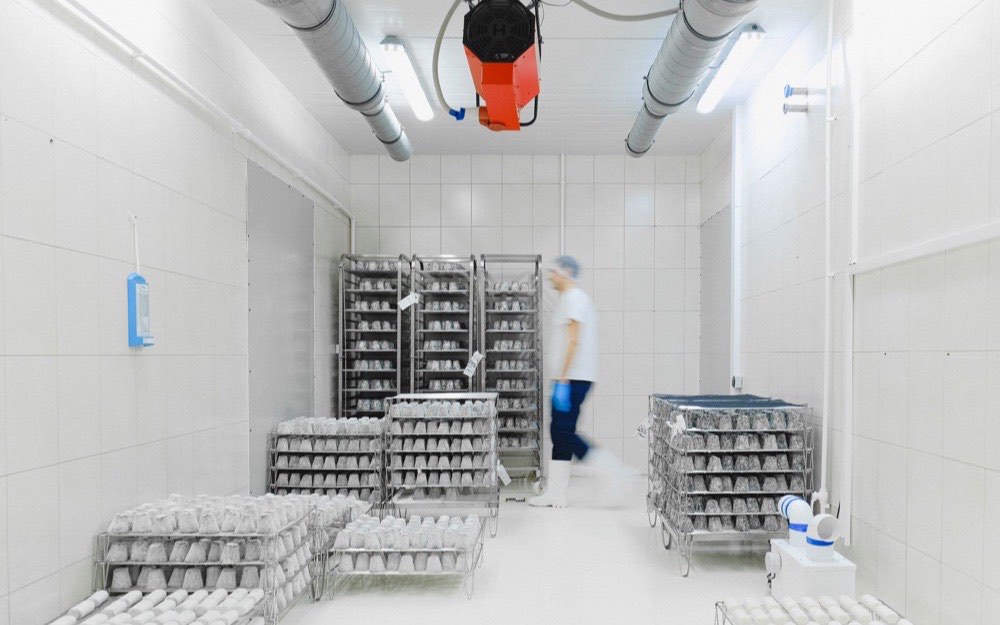
Cold-chain testing usually conditions a pack at 4°C and tests it there. Real cold-chain packaging spends a good deal of its life moving between temperatures, and that is where fibre-based structures give up.
The mechanism is simple and routinely missed. A pack leaves a chiller at 4°C into a loading bay at 22°C and 70% relative humidity. The surface is below the dew point. Water condenses onto the board and stays there.
What that does to compression strength
Corrugated board loses strength as it takes up moisture — in our measurements, somewhere between 20% and 50% depending on flute and liner, with most of the loss arriving in the first hour. A stack that was comfortably within spec in the chiller is not within spec on the bay.
The damage is usually done before anyone sees a problem, because the pallet is restacked while it is weakest and then dries out looking fine.
How we test it now
Cycles rather than states. 4°C to 22°C at 70% RH, held for ninety minutes, repeated three times, with compression measured at the worst point rather than at the end. The end is when the board has recovered and the number looks good.
What usually fixes it
Rarely a different material. Usually a moisture-resistant liner on the outer only, or a change to how long pallets sit on the bay, which costs nothing at all and is nobody's job to notice. We have twice reported that the answer was a scheduling change and closed the project early.