Materials
What "recyclable" means to a sorting line
· Tomas Vidal
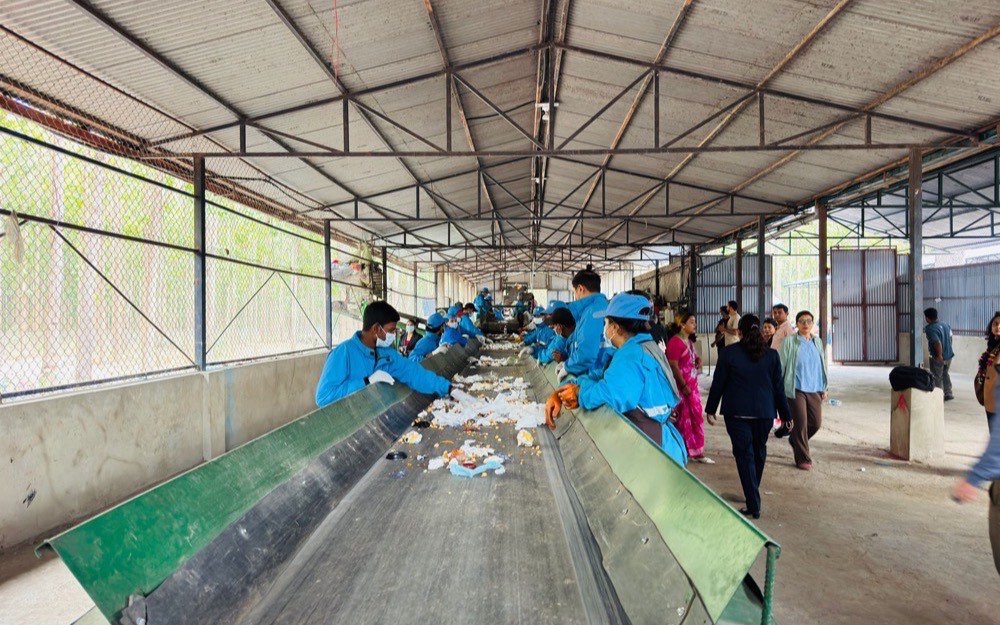
Recyclability is usually discussed as a property of a polymer. On a materials recovery facility it is a property of a moving object under a near-infrared scanner, travelling at about two and a half metres per second, being judged in around twenty milliseconds.
That distinction decides more than the polymer does.
Three things that make a recyclable pack unrecyclable
Carbon black. NIR sorters work by reflected light. Carbon-black pigment absorbs it, so a black PET tray reads as nothing at all and goes to residue. The polymer is perfect. The tray is not recycled. Detectable black pigments exist and cost more, which is a real conversation to have rather than a footnote.
Full-wrap sleeves. A sleeve covering more than about two-thirds of a bottle means the scanner sees the sleeve, not the bottle. A PET bottle in a PVC sleeve is sorted as PVC, and one PVC bottle in a PET bale is a contamination problem for the whole bale.
Density above 1.0. Float-sink separation assumes polyolefins float. A PP closure with a mineral filler that pushes it past water density sinks with the PET flake and contaminates it.
The test that is worth doing
Before committing, send samples to a recycler and ask them to run it. Not a lab — an actual reprocessor with an actual line. It costs a few hundred pounds and it is the only test that answers the question you are asking.
We started doing this after specifying a pack that passed every design-for- recycling guideline and was rejected by the first MRF that saw it. The guidelines were current. The line was older than the guidelines.